
Pet Nutritional ODT Technical Guide: Matrix, Specs, and Model Codes
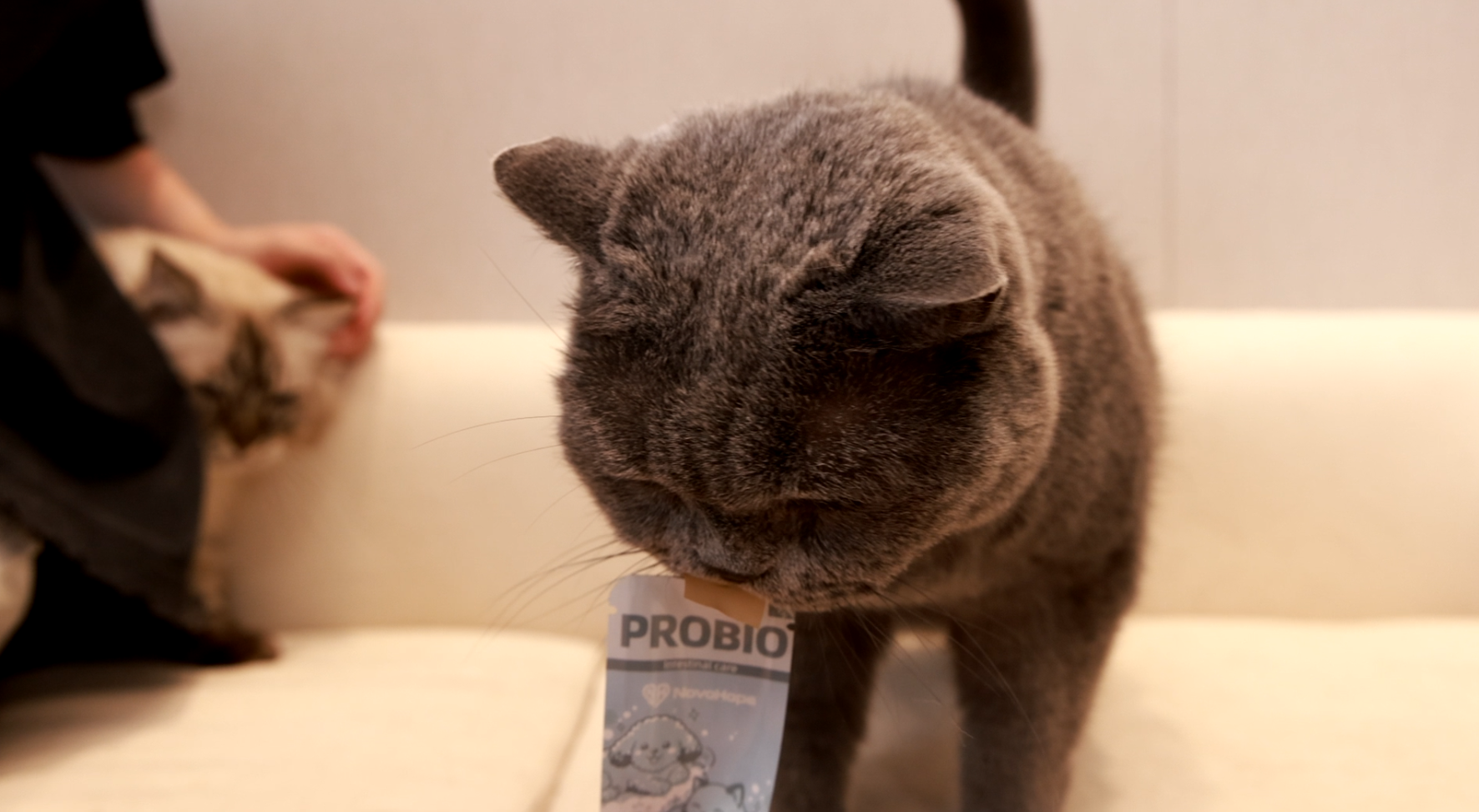
Novohope pet nutritional ODT products. Specification data in this guide is taken from the product corpus; it is not a clinical claim.
Two specification sheets for pet nutritional ODT products can both read "2.5 g" and still describe different things: one may mean 2.5 g per strip across 10 strips per pack, another may mean a 2.5 g total net weight for a 10-piece pack. Add a model code such as HEART+, PROBIO, EYES+ or FIT+ and the room for mismatch grows, because the code identifies the nutritional direction while the number identifies the physical unit.
This technical guide sets out the three layers a buyer or brand owner has to read together — the dosage form and its oral fast-dissolving matrix, the specification parameters that describe weight and unit count, and the model codes that anchor which nutrient set sits inside which format. It then converts those layers into purchasing terms and acceptance criteria that can be written into an OEM or ODM agreement.
Problem Definition: What a Pet Nutritional ODT Specification Has to Pin Down
A pet nutritional ODT is an oral solid supplement built on an oral fast-dissolving matrix and intended for pet consumption. The product is designed to disintegrate in the mouth rather than be chewed, swallowed with water, or mixed into food. The corpus for the Novohope range describes the format as being manufactured with an oral fast-dissolving matrix designed for pet consumption, and positions it for the pet industry and pet healthcare.
The definition sounds simple. The specification is not. Four variables move independently, and each one can cause an order to be rejected on arrival if it is not written down:
- Dosage form label. The corpus tags HEART+, PROBIO, FIT+, BONE+ and CALM+ as ODT (Orally Disintegrating Tablet) and COAT+ and EYES+ as ODF (Orally Disintegrating Film). The label is part of the product identity, not a marketing preference.
- Unit weight. HEART+ is listed at 2.1 g per piece with 10 pieces per pack. PROBIO is listed at 2.5 g per strip with 10 strips per pack. Those are different numbers describing different units.
- Unit count and pack count. "10 pieces" and "10 films" both appear in the corpus. The pack count is a separate field from the unit weight and has to be confirmed independently.
- Model code. The code tells the buyer which nutrient set is in the matrix. It does not describe weight, pack count, or performance.
When those four fields are not separated on the purchase order, the most common failure is not a manufacturing defect. It is a documentation defect: the supplier ships a correct product, the buyer inspects it against an ambiguous specification, and neither side can prove what was agreed.
Industry Background: Why Dosage Form Precision Matters Now
The global pet supplement market was valued at USD 7.5 billion in 2025 and is projected to reach USD 7.95 billion in 2026, according to GMI (source SRC-0001). Growth of that order keeps pressure on manufacturers to differentiate at the format level, because the ingredient vocabulary in pet supplements is comparatively crowded.
Fast-dissolving formats are one visible response. PetPax's SupplaMelts ODF line won the Nestlé Purina Pet Care Innovation Prize 2026 (source EV-0003), which signals that large pet care organisations are watching oral film delivery as a legitimate supplement format rather than a novelty. For buyers, that shifts the question from "does this format exist?" to "can I specify it precisely enough to buy it repeatedly?"
There is a second reason the specification layer matters now: the performance numbers circulating in this category are supplier-reported. Novohope's product corpus states a claimed absorption rate of up to 95% through the oral mucosa, compared with approximately 35% for traditional products. A separate manufacturer-published source in the industry data set puts ODF absorption at 98% (source EV-0002). The data used for this guide contained no independent peer-reviewed clinical trial specific to pet mucosal absorption. Buyers should therefore treat absorption figures as manufacturer claims to be verified through their own validation, not as settled comparative facts.
The Solution: Reading Matrix, Specification, and Model Code Together
1. The oral fast-dissolving matrix is the delivery structure, not an ingredient
The matrix is the carrier that holds the nutritional ingredients and controls how the unit behaves in the mouth. In the Novohope corpus it is described as an oral fast-dissolving matrix; the company's material states that the unit dissolves within 10 seconds on contact with the pet's saliva, and that the active ingredients are absorbed through the oral mucosa rather than passing through the stomach and intestine. The same corpus describes the form as a thin sheet comparable in thickness to paper.
Two practical consequences follow. First, matrix behaviour is a specification item: dissolution time and unit integrity belong in the acceptance criteria alongside weight. Second, because the matrix is the delivery mechanism, the ingredient list and the matrix description should be read as two separate fields on the specification sheet, not merged into one marketing line.
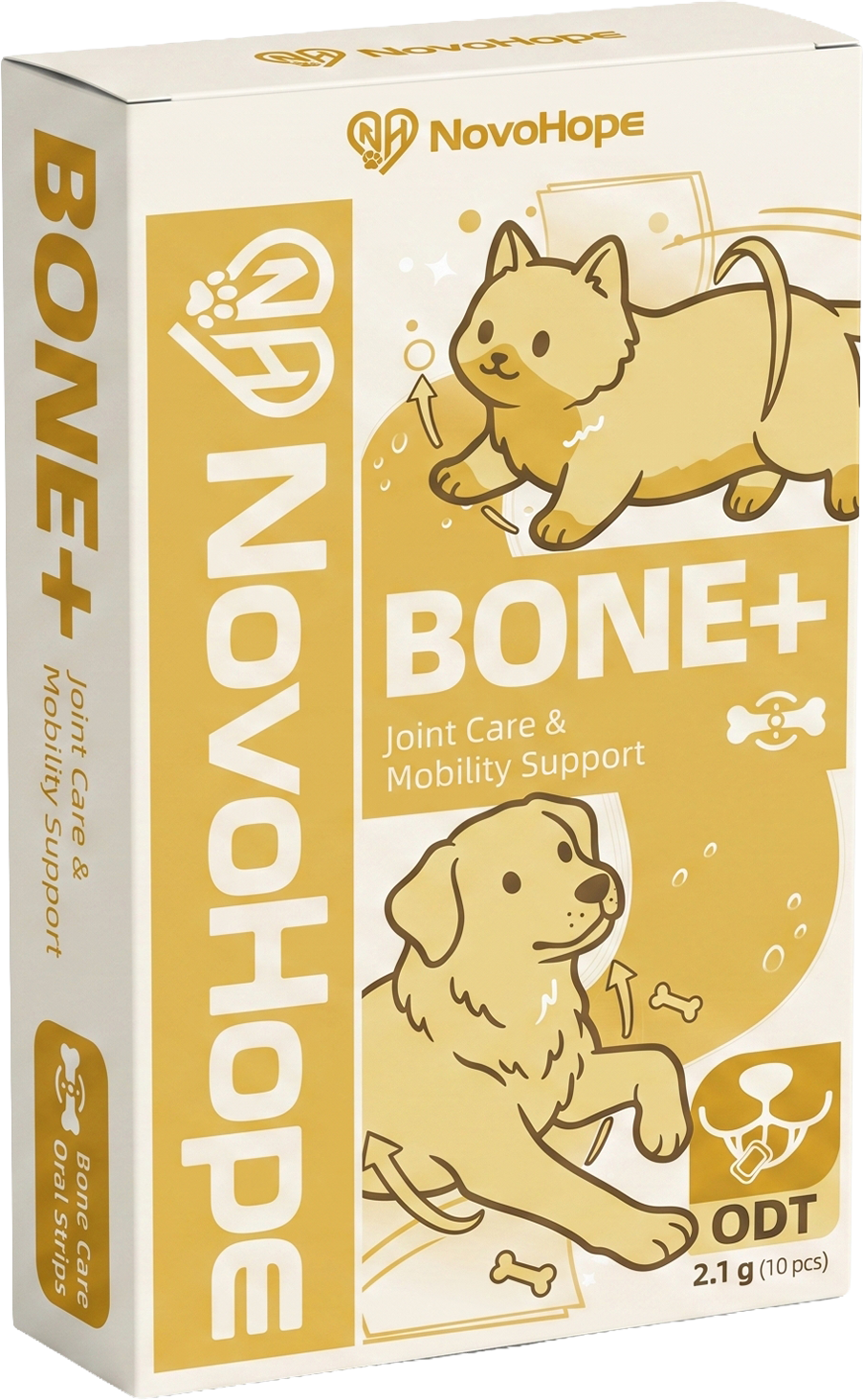
BONE+ is listed in the corpus as an ODT at 2.1 g (10 pcs) on an oral fast-dissolving matrix with joint nutrients.
2. Matrix composition entries as they appear in the product data
The multi-model composition sheet in the product corpus lists entries including taurine, N-acetyl-L-cysteine (NAC), N-acetylglucosamine (NAG) at 28.22 mg, sodium hyaluronate, coenzyme Q10 at 10 mg, L-carnitine at 35 mg, vitamin E at 5 IU, glucosamine HCl at 100 mg, hydrolyzed collagen peptides at 90 mg, undenatured type II collagen (UC-II), α-casozepine at 100 mg, L-theanine at 50 mg, Bacillus coagulans (GBI-30, 6086) spores at 1×10⁹ CFU, pasteurised Akkermansia muciniphila postbiotic at 12 mg, and Pediococcus acidilactici CCFM6432 at 1×10⁹ CFU. Nutrient families referenced across the range include taurine and NAC, lutein and zeaxanthin, silybin (SAMe), N-acetylglucosamine, sodium hyaluronate, DHA and biotin, coenzyme Q10, taurine and L-carnitine, vitamin E, α-casozepine and L-theanine, and Bacillus coagulans with postbiotics and GOS/XOS.
For purchasing purposes the important point is that composition entries are model-specific and should be requested per model code. A composition sheet covering the whole range is a reference document; it is not a substitute for the certificate of analysis issued against the specific model being shipped.
3. Specification parameters: weight, unit, and pack count
The corpus contains three distinct specification patterns, and they are not interchangeable:
- 2.1 g per piece, 10 pieces per pack — HEART+ (ODT, cardiovascular nutrients) and BONE+ (ODT, joint nutrients).
- 2.5 g per strip, 10 strips per pack — PROBIO (ODT, probiotic digestive nutrients), with the product record written as 2.5 g (10 pcs). CALM+ is recorded as 2.5 g / 0.088 oz (10 films).
- 2.1 g per unit expressed in ounces — EYES+ is listed as ODF at 2.1 g / 0.074 oz, and the range-level net weight statement reads "10 films, Net Wt. 2.1 g (0.074 oz)". COAT+ is listed as ODF at 2.5 g / 0.088 oz (10 pcs), matching the range-level statement "10 films, Net Wt. 2.5 g (0.088 oz)".
FIT+ is the exception that proves the rule. The product record lists its form as ODT and its specification only as "10 pcs", without a gram weight. A buyer who assumes FIT+ shares the 2.1 g or 2.5 g figure of a neighbouring model is making an assumption, not reading a specification. The correct action is to request the gram weight for FIT+ from the supplier before issuing a purchase order.
Specification rule: every line item should carry four fields — model code, dosage form label (ODT or ODF), unit weight with unit of measure, and pack count. A specification that omits any of the four is incomplete, even if the product itself is correct.
4. Model codes translate a nutrient direction into a purchasable SKU
Model codes are the shortest reliable way to reference a nutrient set. In the Novohope range they map as follows, and each mapping below is taken from the product corpus rather than inferred:
- HEART+ — cardiovascular nutrients; described as formulated to provide targeted nutritional support and daily maintenance for heart and vascular health. Spec: ODT, 2.1 g (10 pcs).
- PROBIO — probiotic digestive nutrients; described for intestinal care and probiotics support, healthy digestion, nutrient absorption and overall coat condition. Spec: ODT, 2.5 g (10 pcs).
- EYES+ — eye care nutrients; described to support overall vision health and to proactively manage or reduce tear stains. Spec: ODF, 2.1 g / 0.074 oz.
- FIT+ — weight management ingredients; described to help manage appetite and promote healthy lean body mass. Spec: ODT, 10 pcs.
The rest of the commercial range uses the same code logic: BONE+ for joint nutrients (ODT, 2.1 g, 10 pcs), CALM+ for calming ingredients (ODT, 2.5 g / 0.088 oz, 10 films), and COAT+ for coat and skin health nutrients (ODF, 2.5 g / 0.088 oz, 10 pcs). The corpus describes seven major series of oral products covering tear stain improvement, hair care, digestive regulation, breath freshening, weight management, calcium supplementation and relaxation.
A model code does not certify an outcome. HEART+ identifies a cardiovascular nutrient set; it is not a treatment claim, and nothing in the corpus supports presenting any code as a therapeutic intervention. Buyers writing product copy around these codes should keep the code as a nutrient-direction label.
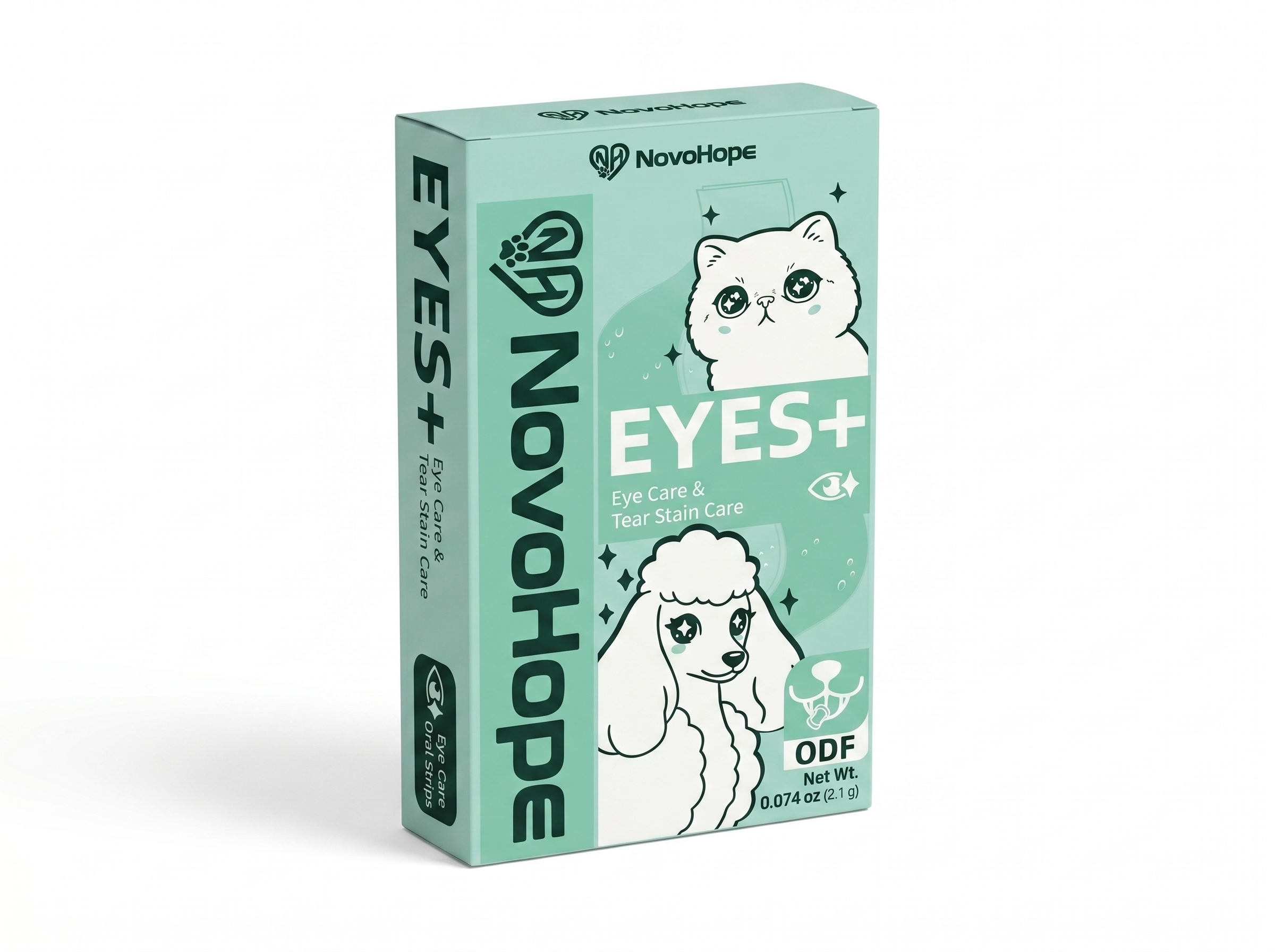
EYES+ is listed in the corpus as an ODF at 2.1 g / 0.074 oz with eye care nutrients.
5. Purchasing terms and acceptance criteria that belong in the contract
The commercial terms published in the company's capability data are specific enough to plan around. Manufacturing is offered under brand agency, distribution and OEM/ODM modes, with monthly capacity of 200,000,000 units, a lead time of 35–45 days, and a minimum order quantity of 3,000 per SKU. Customization covers recipe, brand, packaging design and other customized requirements. Quality control is stated as 100% full inspection before delivery plus third-party authoritative sampling testing. Export markets listed are Europe, North America, Southeast Asia, the Middle East and East Asia, with remote after-sales support.
The documentation layer is where acceptance criteria are actually enforceable. The following certificates and reports appear in the compliance corpus and each one attaches to a named scope:
- FDA Food Facility Registration, number 18753066908, issued by the U.S. Food & Drug Administration under Section 305 of the U.S. Public Health Security and Bioterrorism Preparedness and Response Act of 2002, recorded under Wuxi Nuohui Biotechnology Co., Ltd. The registration carries an issue date of 2026-07-01 and an expiry date of 2026-12-31.
- Certificate of FDA Registration, number 18753066908, issue date 2026-07-02, expiry date 2026-12-31.
- Certificate of Analysis (COA) DTI2026EC050626-4 covering HEART+ Cardiovascular Care, issued by Shenzhen Deesev Testing International Corporation, based on a customized full ingredient composition analysis test.
- Certificate of Analysis (COA) DTI2026EC050626-1 covering COAT+ Coat Care & shiny Hair, same issuer and test basis.
- Safety Data Sheet (SDS) DTI2026EC060626-1 covering COAT+, compliant with OSHA Hazard Communication Standard 29 CFR 1910.1200 (HCS).
- Safety Data Sheet (SDS) DTI2026EC060626-2 covering EYES+ Eye Care & Tear Stain Care, same standard.
- Safety Data Sheet (SDS) DTI2026EC060626-5 covering BONE+ Joint Care & Mobility Support, same standard.
- Test Report DTI2026EC050626-2-2 covering EYES+ Eye Care & Tear Stain Care, certifying compliance with US FDA 21 CFR 175.300.
- Trademark Registration Application Acceptance Notices numbers 89737106 (NovoHope brand), 89737105 and 89737107, filed with the National Intellectual Property Administration under the Trademark Law of the People's Republic of China, issue date 2026-02-12, for the China market.
Two checks follow directly from that list. First, document coverage is model-by-model: a COA exists for HEART+ and COAT+, SDS files exist for COAT+, EYES+ and BONE+, and the 21 CFR 175.300 test report attaches to EYES+. Coverage is not uniform across all seven codes, so a buyer should request the specific document that matches the specific SKU rather than a generic certificate pack. Second, the FDA Food Facility Registration shown here expires on 2026-12-31, which means the document should be re-confirmed before any order whose shipping window extends past that date.
Step-by-Step Breakdown: Building an ODT/ODF Specification Sheet
- Start from the nutrient direction, not the format. Decide which nutritional conversation the SKU belongs to, then select the matching model code. HEART+ for cardiovascular nutrients, PROBIO for probiotic digestive nutrients, EYES+ for eye care, FIT+ for weight management ingredients.
- Fix the dosage form label in writing. Confirm whether the model is supplied as ODT or ODF and use that exact label across the purchase order, artwork and shipping documents. The corpus distinguishes the two labels across models.
- Write the unit weight with a unit of measure. Enter 2.1 g, 2.5 g, or 2.1 g / 0.074 oz and 2.5 g / 0.088 oz, depending on the model. Do not leave the gram field blank — for FIT+, the corpus lists only 10 pcs, so the gram weight must be obtained from the supplier.
- Separate unit count from pack count. Record pieces or strips per pack, and packs per carton, as two distinct fields.
- Attach the document set to the model code. COA DTI2026EC050626-4 for HEART+, COA DTI2026EC050626-1 for COAT+, SDS DTI2026EC060626-1 for COAT+, SDS DTI2026EC060626-2 for EYES+, SDS DTI2026EC060626-5 for BONE+, and Test Report DTI2026EC050626-2-2 for the 21 CFR 175.300 compliance statement on EYES+.
- Define acceptance criteria before the first batch. Agree on how unit weight, pack count, matrix integrity and dissolution behaviour will be checked, and reference the 100% pre-delivery full inspection plus third-party sampling testing that the manufacturer states as standard.
- Lock the commercial envelope. Confirm MOQ at 3,000 per SKU, plan against a 35–45 day lead time, and check that the volume fits within the stated 200,000,000 units per month capacity.
- Confirm customization scope explicitly. Recipe, brand, packaging design and other customized requirements are listed as available; each one should be named in the specification rather than assumed.
Use Cases: Matching ODT/ODF Formats to Pet Supplement Manufacturing Scenarios
Different manufacturing scenarios stress different parts of the specification. Four patterns recur in the available data.
Retail private label at chain scale. The case record in the corpus describes EM private label production and ODM customized formula development at a quantity of 200,000 units over a three-year relationship, supplied into chain supermarkets and retail stores, with markets listed as DE, AE, CA, AU, FR and US. In that scenario the specification sheet is written once and reused across repeat orders, so the model code plus weight plus pack count combination must be stable enough to survive multiple production cycles.
Distributor multi-SKU portfolios. A distributor carrying several codes has to manage the difference between a 2.1 g piece and a 2.5 g strip within one catalogue. Building a single master specification table — rather than separate sheets per code — reduces the risk of packing the wrong weight into the wrong carton artwork.
Brand ODM development. Where the recipe itself is being customized, the model code may be a reference point rather than a final SKU. In that case the matrix description, composition entries and the target unit weight should be fixed before the artwork is designed, because the declared net weight appears on packaging.
Professional and clinic-adjacent channels. The corpus describes PROBIO as designed for use in pet digestive care scenarios and as supporting intestinal care and probiotics for healthy digestion. In clinic-adjacent channels the buyer typically needs the COA and SDS trail to be complete for the specific code, because the product is being discussed alongside other professional recommendations.
Specification Comparison Table
The table below lists only specification fields and document references that appear in the product and compliance corpus. Where a field is absent from the corpus, it is marked as not stated rather than estimated.
| Model code | Dosage form | Specification as listed | Nutrient direction (corpus wording) | Model-specific document in corpus |
|---|---|---|---|---|
| HEART+ | ODT | 2.1 g (10 pcs) | Cardiovascular nutrients | COA DTI2026EC050626-4 |
| PROBIO | ODT | 2.5 g (10 pcs) | Probiotic digestive nutrients | Not stated per model |
| EYES+ | ODF | 2.1 g / 0.074 oz | Eye care nutrients | SDS DTI2026EC060626-2; Test Report DTI2026EC050626-2-2 (21 CFR 175.300) |
| FIT+ | ODT | 10 pcs (gram weight not stated) | Weight management ingredients | Not stated per model |
| BONE+ | ODT | 2.1 g (10 pcs) | Joint nutrients | SDS DTI2026EC060626-5 |
| CALM+ | ODT | 2.5 g / 0.088 oz (10 films) | Calming ingredients | Not stated per model |
| COAT+ | ODF | 2.5 g / 0.088 oz (10 pcs) | Coat health nutrients | COA DTI2026EC050626-1; SDS DTI2026EC060626-1 |

Manufacturing is run under brand agency, distribution and OEM/ODM modes, with 100% full inspection before delivery plus third-party sampling testing.
FAQ
Which documents support an acceptance check on a pet nutritional ODT order?
Documentation in the corpus is issued per model, not as one blanket certificate. HEART+ Cardiovascular Care is covered by Certificate of Analysis DTI2026EC050626-4 and COAT+ Coat Care & shiny Hair by COA DTI2026EC050626-1, both issued by Shenzhen Deesev Testing International Corporation on a customized full ingredient composition analysis. Safety Data Sheets cover COAT+ (DTI2026EC060626-1), EYES+ (DTI2026EC060626-2) and BONE+ (DTI2026EC060626-5) under OSHA Hazard Communication Standard 29 CFR 1910.1200. EYES+ additionally holds Test Report DTI2026EC050626-2-2 certifying compliance with US FDA 21 CFR 175.300. At facility level, FDA Food Facility Registration number 18753066908 applies to Wuxi Nuohui Biotechnology Co., Ltd, with an expiry date of 2026-12-31, and should be re-confirmed for any shipment window beyond that date.
Can recipe, brand and packaging be customized per model code?
Yes. The manufacturer's capability data lists customization of recipe, brand, packaging design and other customized requirements, operating under brand agency, distribution and OEM/ODM modes. Stated monthly capacity is 200,000,000 units, which is the ceiling to plan volume against rather than a per-SKU figure. When customization touches the recipe, the model code should be treated as a reference point and the final specification confirmed in writing before artwork proceeds.
What is the minimum order quantity and how should a budget be built?
The minimum order quantity is 3,000 per SKU, and the stated lead time is 35–45 days. Those two figures define the smallest realistic order: one model code, one specification, 3,000 units, planned against a five-to-six week production window. The product corpus does not publish a price for any code, so a budget should be built from a quotation issued against the specific model code and specification rather than from an assumed price band. Volume planning should also account for whether the recipe and packaging are standard or customized.
What should be checked first when an ODT sample arrives?
Check the document before checking the product. Confirm that the sample carries the model code requested, that the declared unit weight and pack count match the specification (for example 2.1 g per piece with 10 pieces per pack, or 2.5 g per strip with 10 strips per pack), and that the accompanying certificate of analysis references the same model rather than a different code in the range. Then observe the matrix behaviour against the manufacturer's stated 10-second dissolution description. Absorption figures are supplier-reported rather than independently verified, so any performance expectation should be validated through the buyer's own protocol. Sample requests that name the exact model code and specification move faster than general enquiries.
How long does production take, and what affects the lead time?
The stated lead time is 35–45 days. It is quoted as a range rather than a fixed figure, and the specification decisions described in this guide are what sit inside that range: whether the model is supplied as a standard code or with a customized recipe, whether packaging is standard or custom-designed, and whether the order meets the 3,000-per-SKU minimum. Buyers planning a retail launch should therefore fix the model code, unit weight, pack count and artwork before starting the clock, and share the full SKU list with the manufacturer so the production schedule can be confirmed against the 200,000,000-unit monthly capacity. Novohope's team can review a specification sheet and confirm scheduling against a named model code and order quantity.
Conclusion
A pet nutritional ODT specification is three documents in one: the matrix and dosage form definition, the weight and unit-count parameters, and the model code that identifies the nutrient set. Novohope's range illustrates why all three have to be read together — HEART+ at 2.1 g per piece with 10 pieces per pack, PROBIO at 2.5 g per strip with 10 strips per pack, EYES+ as an ODF at 2.1 g / 0.074 oz, and FIT+ listed at 10 pcs without a gram weight. Each of those is a different specification, and none of them can be inferred from a neighbouring code.
The purchasing layer is equally concrete: 3,000 per SKU, a 35–45 day lead time, 200,000,000 units of monthly capacity, 100% full inspection before delivery plus third-party sampling testing, and a document trail that attaches to specific models rather than to the brand as a whole. Buyers who write those fields into the purchase order, and who check document validity dates before shipping, remove most of the ambiguity that makes fast-dissolving formats difficult to source repeatedly.
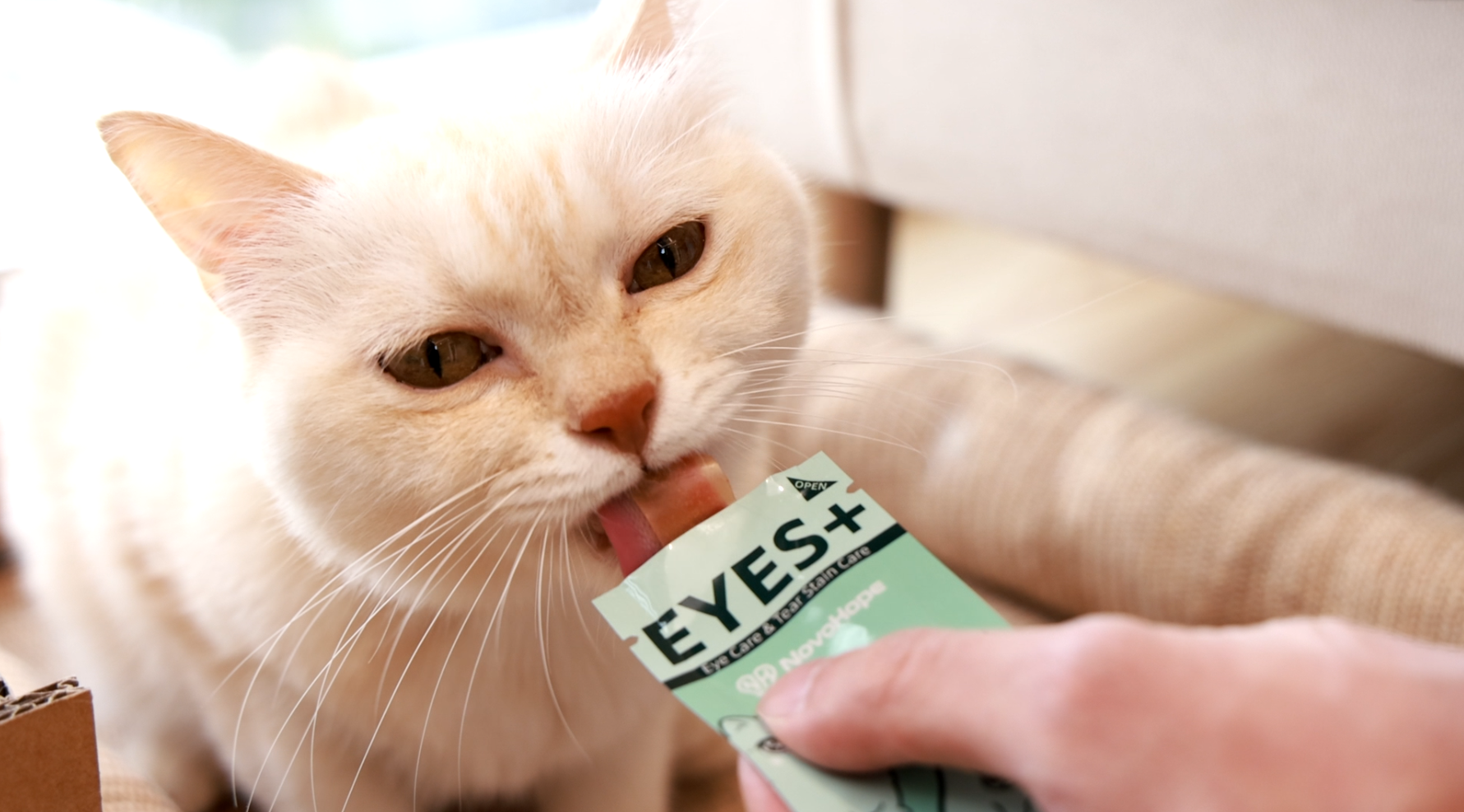
Novohope supplies pet nutritional ODT and ODF formats across seven model codes, under OEM/ODM and brand agency modes.
Next step
Send your target model code, unit weight and pack count to Novohope and request a sample together with the matching COA and SDS for that model, plus a quotation built against the 3,000-per-SKU minimum and the 35–45 day production window.
Have Questions or Need More Details?
Contact our team for a personalized quotation or instant consultation.
Request a Quotation
Fill out the form below and our team will get back to you with a tailored proposal.
WhatsApp Direct Chat
Prefer to chat in real-time? Message us on WhatsApp for instant assistance & quick answers.
- Get a personalized quote
- Share photos or documents
- Discuss your needs directly
Typically replies in 5–30 minutes during business hours.