
What Are Pet Nutritional ODTs? A Primer on Dissolvable Supplement Science
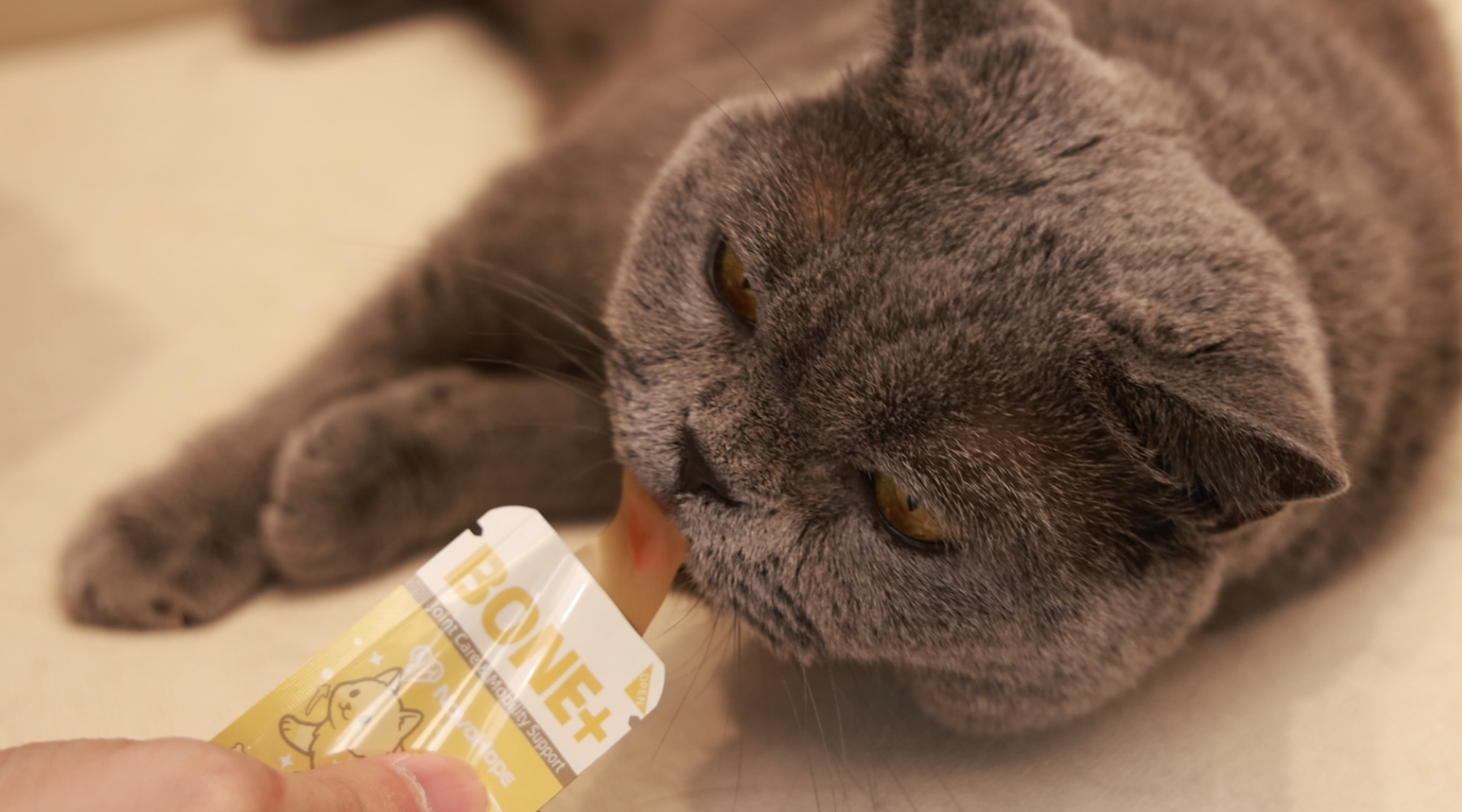
Pet nutritional ODTs are single-dose supplement units built on a fast-dissolving matrix that breaks down on contact with saliva — so a pet never has to chew a tablet, swallow a capsule, or accept a powder mixed into food. In the format published by Novohope, a pet health supplement brand registered with the U.S. Food & Drug Administration, that matrix is described as dissolving in roughly 10 seconds, and the actives are designed to be taken up through the oral mucosa rather than through the stomach.
If you are new to this category — a brand owner scoping a private label, an importer reading a specification sheet, or a clinic comparing delivery formats — the vocabulary is where most confusion starts. ODT, ODF, oral strip, fast-dissolve film and orally disintegrating tablet are used almost interchangeably in supplier documents, but they do not all describe the same physical product. This primer separates the terms, explains what the dissolving matrix is doing inside the unit, and lists the parameters and documents a buyer should record before comparing suppliers.
The problem that dissolvable formats were designed to solve
Supplement formats are usually compared on ingredients. In practice, the format decides whether the ingredient ever reaches the animal. Novohope's own description of its oral format, set against conventional powders, tablets and chewable tablets, names three failure modes:
- Feeding failure. Pets may refuse a supplement, hide it, or spit it out. A format that depends on the animal's cooperation fails exactly when cooperation is not available.
- Absorption variability. Uptake from conventional formats is influenced by the pet's digestive condition, so the delivered dose is not constant from one animal to the next.
- Dose inaccuracy. When a powder is mixed into food, there is no reliable way to confirm how much the animal actually consumed.
Those three constraints — not flavour or packaging — are what an ODT is built around. A unit that dissolves on saliva contact removes the feeding step. A unit absorbed through the oral mucosa bypasses gastric breakdown. And a unit counted as one piece makes intake reportable. That is why format belongs in the specification, alongside the nutrient panel.
Industry background: why the format appeared when it did
Pet supplements are a large and still expanding category. Grand View Research values the global pet supplements market at approximately USD 2.8 billion in 2025, with a projected rise to USD 4.6 billion by 2033, and puts North America at 48.1% of global revenue share in 2025. Mordor Intelligence, working from a narrower "pet dietary supplements" definition, estimates that segment at USD 5.11 billion by 2026 with a CAGR of 7.42% through 2031, and identifies Asia-Pacific as the fastest-growing region, driven by rising pet humanization and healthcare expenditure. The two headline figures differ because the market definitions differ — a useful reminder when a supplier quotes a single number without its source.
What matters for this primer is the technology layer inside that market. Oral dissolvable film technology has moved into the pet sector, with published industry analysis describing disintegration targets below 25 seconds and taste-masking palatability improvements of up to 47% (Market Reports World, 2026). Novohope's stated dissolution time for its pet oral units is faster than that inbound benchmark, at roughly 10 seconds. The gap is the point: "fast-dissolving" is a measurable range, not a fixed property, and buyers should ask for the number rather than the adjective.
What a fast-dissolving matrix actually is
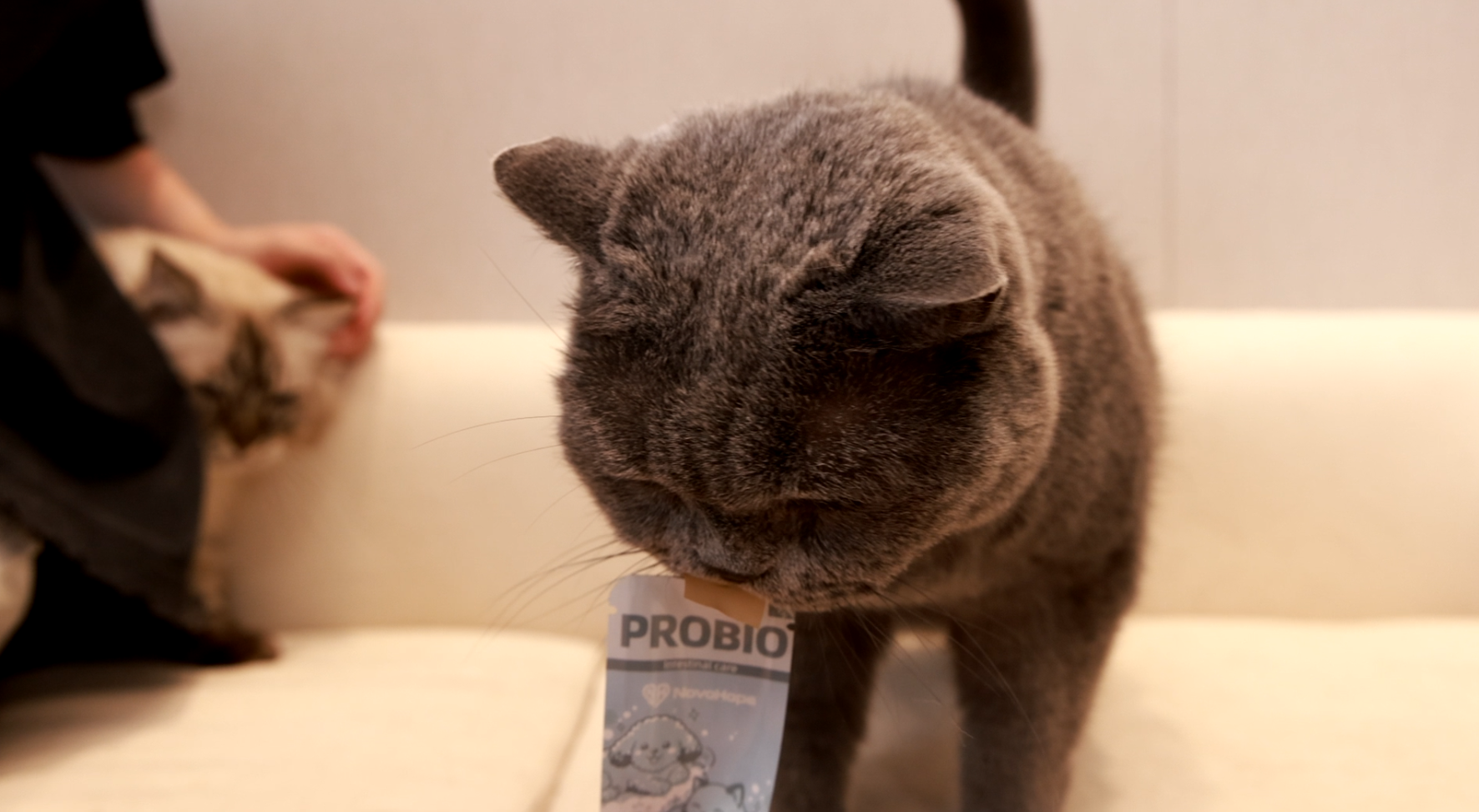
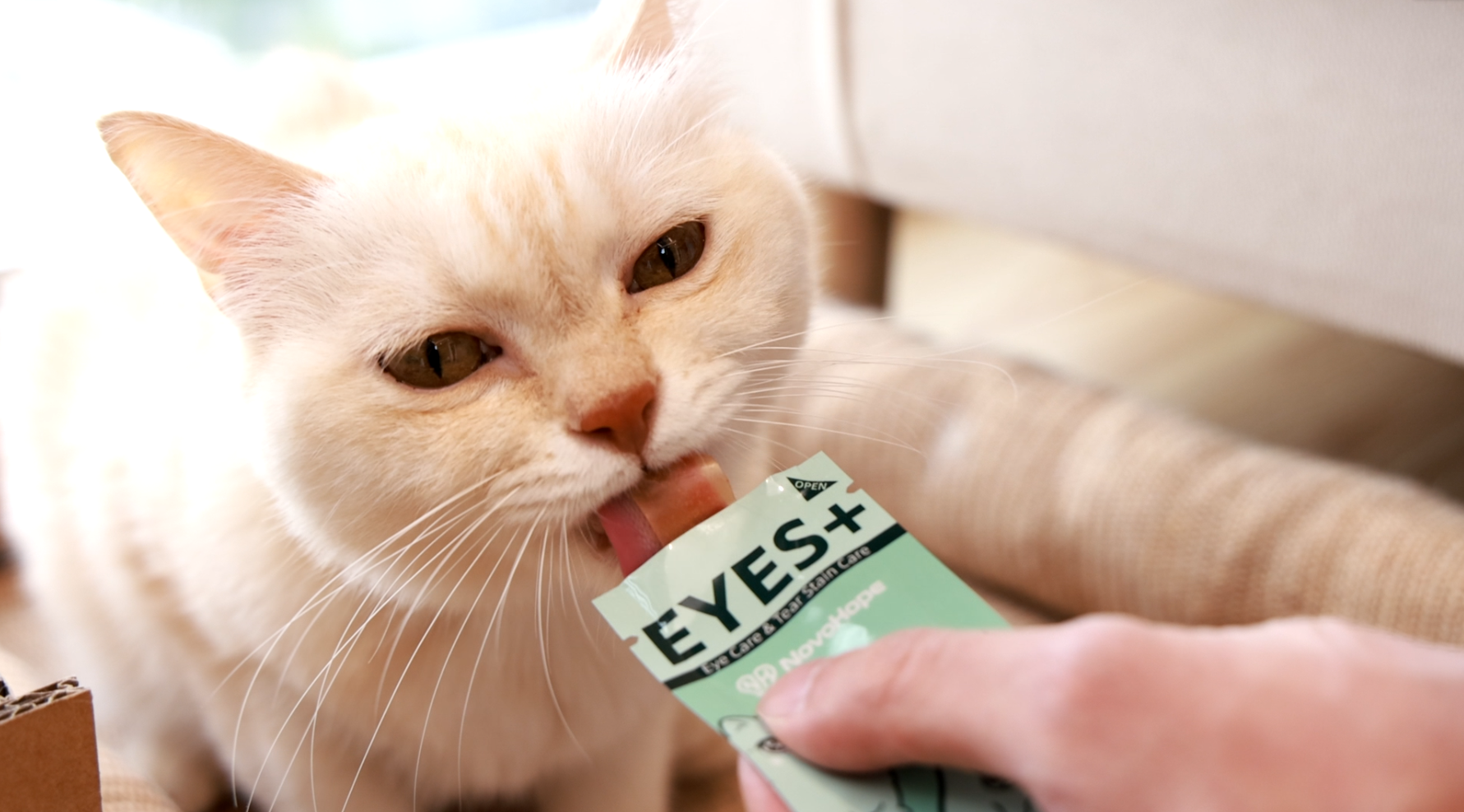
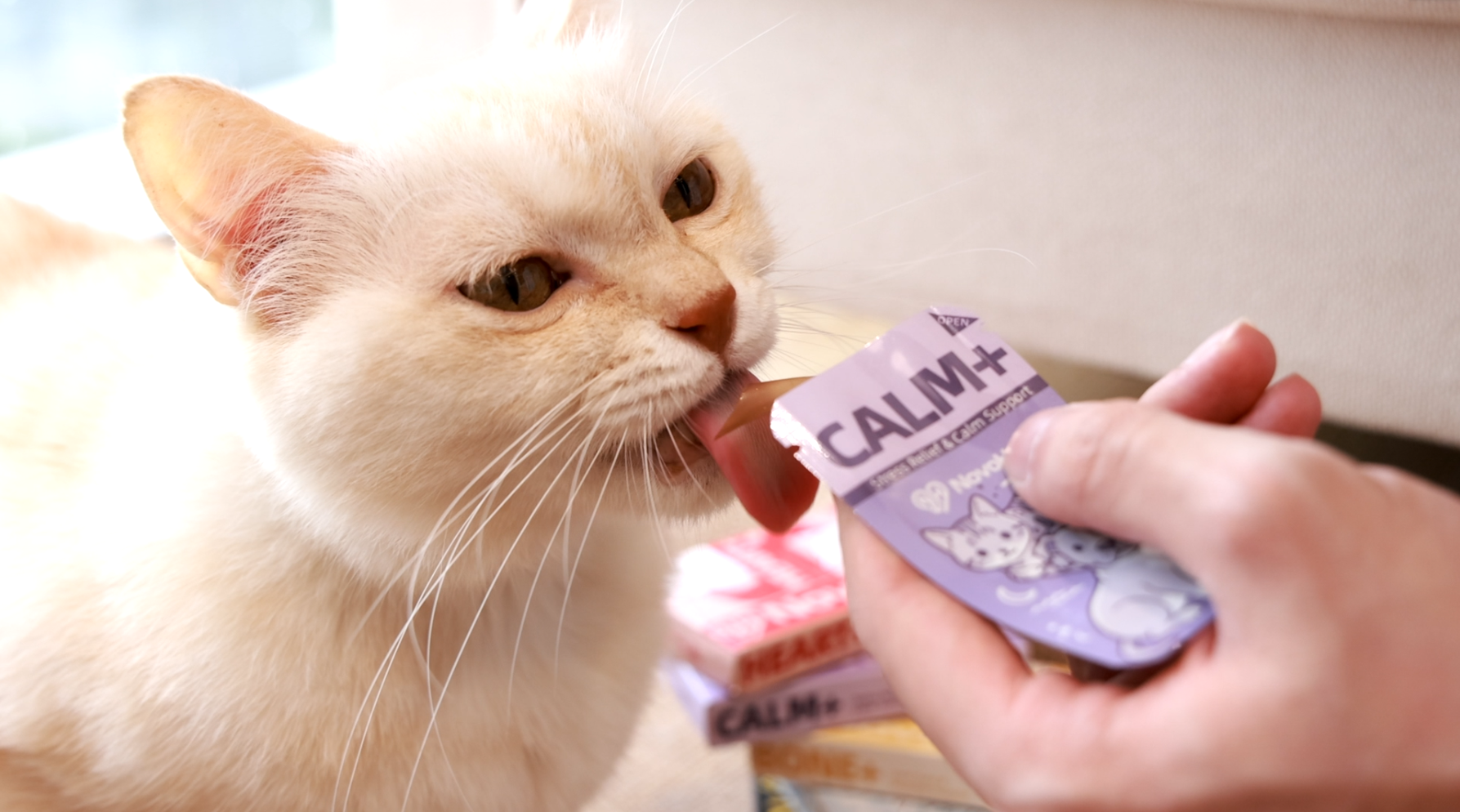
The matrix is the physical carrier. It is a thin sheet that holds the active nutrients in a structure stable enough to sit in a pack and fragile enough to collapse the moment a pet licks it. Novohope describes its unit as a sheet "as thin as paper" that dissolves within about 10 seconds after contact with saliva. Nothing in that description requires a swallowing action, which is why formats of this type are better described as licked than administered.
Delivery is the second half of the design. Instead of passing through the stomach and intestine first, the actives are described as being absorbed directly through the oral mucosa into the bloodstream — a route the brand positions as suited to pet physiology, given the comparatively short intestines and high gastric acid levels of dogs and cats. Novohope's published product literature claims an absorption rate of up to 95% for this route, compared with approximately 35% for traditional formats.
How to read that number. The 95% versus 35% comparison is a first-party claim published by the manufacturer, not an independent measurement. It is useful for understanding the design intent of a mucosal route versus gastric breakdown. It should be validated against your own testing protocol before it goes anywhere near a label.
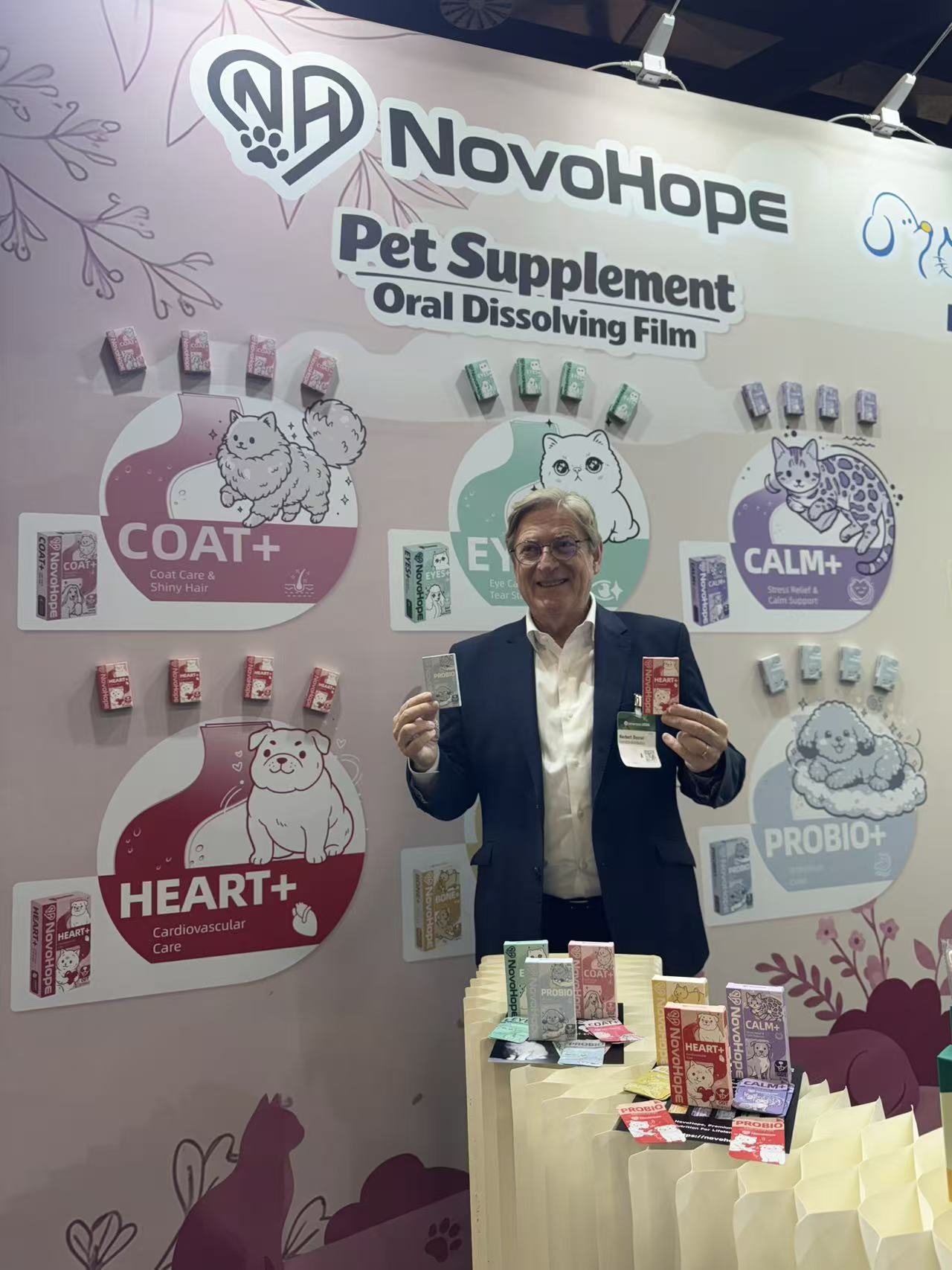
What sits inside the matrix varies by model. The published ingredient disclosures for the line include Coenzyme Q10 at 10 mg, taurine at 50 mg, L-carnitine at 35 mg, vitamin E at 5 IU, N-acetyl-L-cysteine (NAC), N-acetylglucosamine (NAG) at 28.22 mg, glucosamine HCl at 100 mg, hydrolyzed collagen peptides at 90 mg, undenatured type II collagen (UC-II), sodium hyaluronate, lutein and zeaxanthin, DHA and biotin, α-casozepine at 100 mg, L-theanine at 50 mg, Bacillus coagulans (GBI-30, 6086) spores at 1 × 10^9 CFU, inactivated (pasteurised) Akkermansia muciniphila postbiotic at 12 mg, and Pediococcus acidilactici CCFM6432 at 1 × 10^9 CFU. The company states that the line is organised into seven series covering core pet health scenarios.
ODT, ODF, pill, chew, powder: where the formats differ
The naming in this category is not standardised, and that causes real sourcing errors. Within one manufacturer's own catalogue, the family is listed as "Pet Health Oral Strips / Pet Nutritional ODT" for some models and "Pet Health Oral Strips / Pet Nutritional ODF" for others. ODT refers to an orally disintegrating tablet; ODF refers to an orally disintegrating film. Both sit on an oral fast-dissolving matrix and both are dosed as a single unit. What differs between models is the form designation and the published net weight.
| Format | Structure | How it is taken | Dose control | Published example in this line |
|---|---|---|---|---|
| ODT — orally disintegrating tablet | Thin, paper-like fast-dissolving matrix | Dissolves on saliva contact, roughly 10 seconds; no feeding action required | One unit; content per unit is controlled | HEART+ 2.1 g (10 pcs); PROBIO 2.5 g (10 pcs) |
| ODF — orally disintegrating film | Same fast-dissolving matrix principle, published under an ODF designation | Dissolves on saliva contact | One unit; content per unit is controlled | COAT+ 2.5 g / 0.088 oz (10 pcs); EYES+ 2.1 g / 0.074 oz |
| Conventional tablet / pill | Compressed solid | Must be swallowed, or hidden in food | Fixed per tablet; intake depends on the animal accepting it | Not part of this line |
| Soft chew | Chewable matrix | Chewed and eaten | Fixed per chew; intake depends on acceptance | Not part of this line |
| Powder | Loose solid | Mixed into food | Intake cannot be confirmed once mixed | Not part of this line |
Two caveats belong with that table. First, conventional formats remain appropriate in many situations — the documented trade-offs are the three listed earlier, not a general verdict that pills or chews are unsuitable. Second, "dissolves in seconds" is not the same as "delivers a validated dose." Disintegration time is a physical property; absorption is a physiological outcome. Keep the two separate when you evaluate a supplier, and ask for evidence on each.
Parameters to record before you compare suppliers
The published specification for each model combines a form designation, a net weight and a pack count. Recording those three fields side by side is the fastest way to see whether two suppliers are actually quoting the same thing.
| Model | Supplement category | Form | Published specification |
|---|---|---|---|
| PROBIO | Pet digestive care | ODT | 2.5 g (10 pcs) |
| HEART+ | Pet cardiovascular support | ODT | 2.1 g (10 pcs) |
| BONE+ | Pet joint care | ODT | 2.1 g (10 pcs) |
| CALM+ | Pet calming & stress relief | ODT | 2.5 g / 0.088 oz (10 films) |
| FIT+ | Pet weight management | ODT | 10 pcs |
| COAT+ | Pet coat & skin health | ODF | 2.5 g / 0.088 oz (10 pcs) |
| EYES+ | Pet eye care & tear stain care | ODF | 2.1 g / 0.074 oz |
Note how pack weights differ across the line: HEART+ and BONE+ are published at 2.1 g across 10 pieces, while PROBIO and CALM+ are published at 2.5 g across 10 pieces. COAT+ and EYES+ carry both metric and imperial figures — 2.5 g / 0.088 oz and 2.1 g / 0.074 oz respectively. The CALM+ entry also shows why terms get mixed up in practice: the form field reads ODT while the pack field reads "10 films."
Pack net weight, however, is not the same as active content. The same published data lists individual active amounts — taurine 50 mg, Coenzyme Q10 10 mg, glucosamine HCl 100 mg, and so on — and that is the number a formulator actually works with. Ask for both figures, and ask which one the finished label carries.
Compliance documents: what a buyer should verify
In a category defined by format, the documentation package is often the deciding factor in supplier selection — especially for importers placing product into the United States. The following are published for the Novohope pet food and health supplement line.
| Document | Number | Scope / product | Standard or authority | Market |
|---|---|---|---|---|
| FDA Food Facility Registration | 18753066908 | Wuxi Nuohui Biotechnology Co., Ltd | Section 305, U.S. Public Health Security and Bioterrorism Preparedness and Response Act of 2002 | US |
| Certificate of FDA Registration | 18753066908 | Wuxi Nuohui Biotechnology Co., Ltd | U.S. Food and Drug Administration | US |
| Safety Data Sheet (SDS) | DTI2026EC060626-1 | COAT+ Coat Care & shiny Hair | OSHA Hazard Communication Standard 29 CFR 1910.1200 (HCS) | US |
| Safety Data Sheet (SDS) | DTI2026EC060626-2 | EYES+ Eye Care & Tear Stain Care | OSHA Hazard Communication Standard 29 CFR 1910.1200 (HCS) | US |
| Safety Data Sheet (SDS) | DTI2026EC060626-5 | BONE+ Joint Care & Mobility Support | OSHA Hazard Communication Standard 29 CFR 1910.1200 (HCS) | US |
| Certificate of Analysis (COA) | DTI2026EC050626-1 | COAT+ Coat Care & shiny Hair | Customized full ingredient composition analysis | Global |
| Certificate of Analysis (COA) | DTI2026EC050626-4 | HEART+ Cardiovascular Care | Customized full ingredient composition analysis | Global |
| Test report | DTI2026EC050626-2-2 | EYES+ Eye Care & Tear Stain Care | US FDA 21 CFR 175.300 | US |
| Trademark application acceptance notice | 89737106 | "NovoHope" brand, Class 31 | National Intellectual Property Administration, PRC | China |
| Trademark application acceptance notices | 89737105 / 89737107 | Class 7 | National Intellectual Property Administration, PRC | China |
The SDS, COA and test reports listed above were issued by Shenzhen Deesev Testing International Corporation. The trademark acceptance notices were filed 2026-02-12; the FDA Food Facility Registration is valid 2026-07-01 to 2026-12-31 and the SDS, COA and test reports are dated 2026-07-06.
Two structural points are worth pulling out. First, the FDA Food Facility Registration is a renewable registration covering a defined period — confirm the current cycle rather than accepting a screenshot from an earlier year. Second, the EYES+ test report specifically certifies compliance with US FDA 21 CFR 175.300, which is a food-contact materials standard. It is a materials-compliance statement, not a claim about the supplement's efficacy, and it should not be presented as one.
Buyers distributing into the U.S. market also regularly ask about the National Animal Supplement Council (NASC) Quality Seal. The NASC seal requires adherence to Good Manufacturing Practices and rigorous labeling audits. It is an industry standard rather than a government registration, and it is a reasonable question to put to any supplier in this category.

Commercial parameters: MOQ, lead time and capacity
Novohope publishes OEM/ODM engagement across brand agency, distribution and contract manufacturing, with customization available for recipe, brand and packaging design, plus other specified requirements. The stated commercial parameters for the line are a minimum order quantity of 3,000 units per SKU and a lead time of 35–45 days, against a stated monthly capacity of 200,000,000 units. Quality control is described as 100% full inspection before delivery plus third-party authoritative sampling testing, with export coverage listed for Europe, North America, Southeast Asia, the Middle East and East Asia. After-sales support is provided remotely.
Those numbers define the shape of a project rather than its price. The variables that change a quotation in this category are the customization scope — recipe development, brand, packaging design — the documentation package required for the destination market, and the pack format. Because the published standard for the line is a 10-piece pack, a buyer planning a different piece count or a multi-SKU launch should raise both before the quotation stage rather than after it.
Where these formats fit in practice
Format selection is usually driven by the setting in which the supplement is given, not by the nutrient. Four recurring scenarios appear in this category:
- Retail private label. A brand or chain store launching a shelf-ready supplement line, where the pack, the model name and the packaging design are the customizable variables. A published case describes a private-label production and ODM formula-development program supplying 200,000 units into chain supermarkets and retail stores across Germany, the UAE, Canada, Australia, France and the United States over three years, with repeat orders reported.
- Clinic dispensing. Veterinary practices that need a unit-countable dose and a format that does not depend on an owner successfully pilling an animal.
- Travel and stress events. Situations such as travel, loud noises or separation, where a calming formula is used — CALM+ is published with α-casozepine at 100 mg and L-theanine at 50 mg.
- Multi-pet and senior households. Where different animals need different targets — tear stain and eye care, coat condition, joint and mobility support, digestive and probiotic support, weight management or cardiovascular maintenance — from one format family.
Frequently asked questions
1. What compliance documents should a buyer expect for pet nutritional ODTs?
For this line, the published set includes a U.S. FDA Food Facility Registration (number 18753066908, held by Wuxi Nuohui Biotechnology Co., Ltd, valid 2026-07-01 to 2026-12-31); Safety Data Sheets issued by Shenzhen Deesev Testing International Corporation under OSHA 29 CFR 1910.1200 (HCS) — DTI2026EC060626-1 for COAT+, DTI2026EC060626-2 for EYES+ and DTI2026EC060626-5 for BONE+; Certificates of Analysis for full ingredient composition — DTI2026EC050626-1 for COAT+ and DTI2026EC050626-4 for HEART+; a test report DTI2026EC050626-2-2 confirming US FDA 21 CFR 175.300 compliance for EYES+; and GS1 international product codes. Trademark application acceptance notices are held with China's National Intellectual Property Administration under numbers 89737106 ("NovoHope", Class 31), 89737105 and 89737107 (Class 7). Buyers distributing into the United States should also ask about the NASC Quality Seal, which requires GMP adherence and labeling audits.
2. Can the formula, brand and packaging be customized?
Yes — the published customization scope covers recipe, brand and packaging design, together with other specified requirements. Novohope operates as an OEM/ODM partner for brand agencies, distributors and contract manufacturing across seven published models in the oral strip line. Production is supported by 100% full inspection before delivery plus third-party authoritative sampling testing, with a stated monthly capacity of 200,000,000 units.
3. What drives the commercial terms of an ODT project?
The published commercial parameters for the line are a minimum order quantity of 3,000 units per SKU and a lead time of 35–45 days. Beyond those two fixed figures, the variables are the customization scope (recipe development, brand, packaging design), the documentation and testing package required for the destination market, and the pack format — the published standard being a 10-piece pack. Buyers planning a different piece count or a multi-SKU launch should state both before quotation.
4. Can a buyer validate the format before committing to a full run?
Format validation is a sensible first step, because disintegration and handling behaviour are physical properties you can observe directly rather than physiological claims you have to accept. Novohope engages on recipe, brand and packaging customization within brand agency and distribution models, so the practical route is to request a sample of the relevant model — HEART+ at 2.1 g across 10 pieces, for example — and assess dissolution, palatability and pack handling before placing a first order at the 3,000-unit-per-SKU minimum. You can start that request through the Novohope website.
5. What is the lead time and MOQ?
The published lead time is 35–45 days and the minimum order quantity is 3,000 units per SKU. Capacity is stated at 200,000,000 units per month, export coverage includes Europe, North America, Southeast Asia, the Middle East and East Asia, and after-sales support is provided remotely.
The next step
If you are new to this category, the shortest path to a confident decision is to fix three things in writing before any quotation: the form designation (ODT or ODF), the pack specification (net weight and piece count), and the documentation package required for your destination market. Everything else — formula, brand, packaging — is negotiable inside those three constraints.
Keep the primer distinction in mind as you go deeper. Disintegration time is a physical measurement you can verify on a bench. Absorption is a physiological outcome that needs your own testing protocol. Suppliers who separate the two clearly are usually the ones worth continuing a conversation with.
Evaluating an ODT or ODF line for your market?
Request a sample of the model that matches your target health scenario, or ask for the specification sheet, COA and SDS set for your destination market.
Have Questions or Need More Details?
Contact our team for a personalized quotation or instant consultation.
Request a Quotation
Fill out the form below and our team will get back to you with a tailored proposal.
WhatsApp Direct Chat
Prefer to chat in real-time? Message us on WhatsApp for instant assistance & quick answers.
- Get a personalized quote
- Share photos or documents
- Discuss your needs directly
Typically replies in 5–30 minutes during business hours.