
Vetting a Pet Supplement ODM: Key Checks for Oral Strip Production
Choosing a contract manufacturer for pet oral strips is a capability audit, not a price negotiation. Buyers at the decision stage already understand what a fast-dissolve film is; the open question is whether a given ODM can reproduce an approved strip at commercial volume, batch after batch, with documentation that survives a regulatory review.
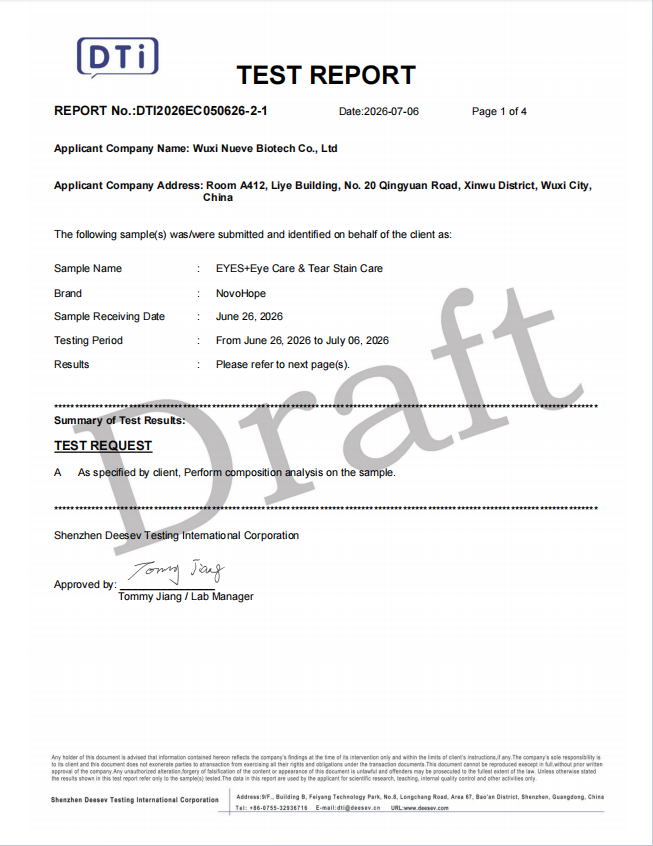
This memo sets out the checks that matter when auditing an oral strip producer, using Novohope's dissolvable film line — including the commercially packaged EYES+ Eye Care & Tear Stain Care strip — as a worked example of what a supplier should be able to demonstrate on request. It covers fast-dissolving matrix sourcing, proven production specifications, category depth in eye care, quality documentation, technical support and commercial transparency. None of the checks below requires you to accept a claim that cannot be verified.
The Real Risk in Oral Strip Sourcing Is Specification Drift
The largest risk when outsourcing pet oral strips is not price, and it is not whether the supplier can produce a sample. It is specification drift — the strip you approve during sampling is not the strip that arrives in the production batch.
Three failure points account for most of that drift:
- Matrix and formulation substitution. Because an oral strip is a thin, low-mass dosage form, a change in the film-forming matrix, plasticiser or coating weight can alter how the strip behaves in the mouth.
- Undocumented dissolution performance. A supplier that cannot show a measurement method and a batch record cannot guarantee that a strip dissolves in the same time window in every lot.
- Packaging and count inconsistency. Strip count per pack, seal quality and moisture protection are production variables, not cosmetic details.
Most buyers open the conversation with the wrong question. 'Can you make oral dissolvable films?' is answered yes by every supplier with a laboratory. The question that produces usable information is narrower: which specifications on this strip have you already run at commercial volume, and which documents prove it?
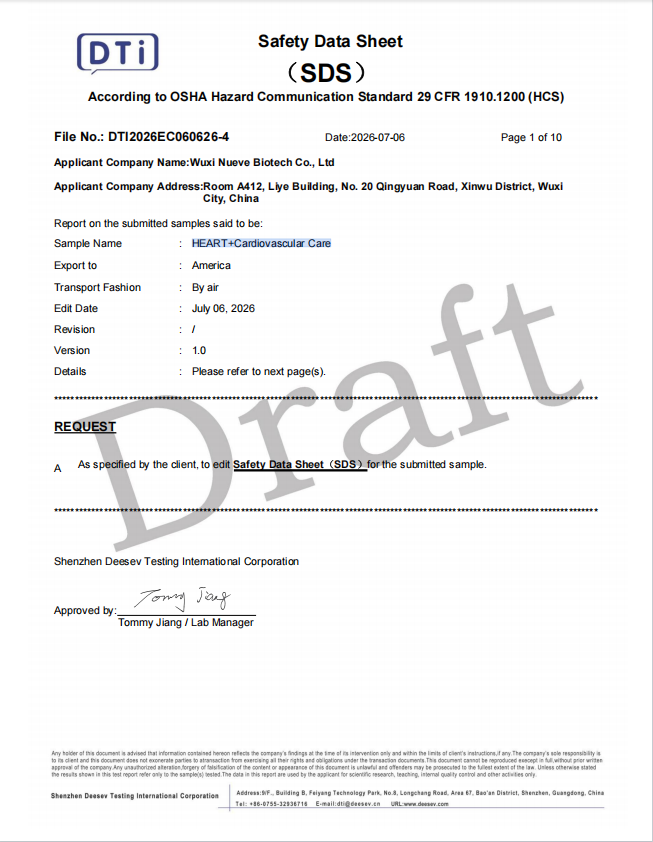
Risk control in this category is procedural. A qualified ODM manages product quality risk through product certification, test reports, production process control and a functioning after-sales team. Novohope describes a mature factory quality control system under which products undergo strict quality and product certification before sale. Those are the four levers to test during an audit — not general language about innovation.
Why Fast-Dissolve Pet Films Became a Sourcing Category
Oral dissolvable film (ODF) is no longer a novelty format in pet nutrition; it is a category with measurable demand and its own supply base.
- The global pet supplements market was valued at approximately USD 2.8 billion in 2025 and is projected to reach USD 4.6 billion by 2033 (Grand View Research). A separate estimate places the pet dietary supplements segment at USD 5.11 billion by 2026, growing at a 7.42% CAGR through 2031 (Mordor Intelligence). The figures differ because the agencies classify the category differently.
- North America accounted for 48.1% of global pet supplement revenue share in 2025, while Asia-Pacific is projected as the fastest-growing region, driven by rising pet humanisation and healthcare expenditure (Grand View Research; Mordor Intelligence).
- ODF technology development in the pet sector has focused on disintegration times below 25 seconds and taste-masking palatability improvements of up to 47% (Market Reports World).
- In the tear stain segment specifically, top-selling dog tear stain supplements on major e-commerce platforms can reach monthly volumes of around 100,000 units, with growth attributed to antioxidant blends such as lutein, zeaxanthin and astaxanthin (ASINSIGHT; this dataset is flagged for verification).
Two consequences follow for buyers. First, demand supports investment in a dedicated strip line rather than a tablet line with a film attachment. Second, the credibility of a US-facing supplier is increasingly tied to recognised standards: the National Animal Supplement Council (NASC) Quality Seal, for example, requires adherence to Good Manufacturing Practices (GMP) and rigorous labelling audits.
Novohope is a pet health supplement brand officially established in 2025 that positions its range around 'root-cause restoration' and 'biorhythmic sync', using human-grade pet nutrition as its formulation baseline. That positioning is only useful to a buyer if the underlying production capability can be audited — which is what the checks below are for.
Six Checks That Determine Whether an Oral Strip ODM Can Deliver
Each check below pairs the question to ask with the evidence that answers it. Treat the evidence, not the answer, as the decision input.
Check 1 — Film-Forming Matrix Sourcing and Material Qualification
An oral strip is only as consistent as its matrix. Ask the ODM to name the film-forming polymer system, the plasticiser and any functional coating, and to explain how each incoming material lot is qualified and traced. For fast-dissolving formats, the relevant question is whether the supplier sources materials for fast-dissolving matrices as a routine, qualified specification or adapts a standard matrix when an order arrives. The first answer indicates a stable process; the second indicates a development project you will end up funding.
Request: material specification sheets, approved-supplier list, incoming inspection records, and lot traceability for the exact matrix used in your sample.
Check 2 — Proven Production Specifications, Not Prototype Specifications
This is the check where most shortlists separate. A production-ready oral strip programme can state its specifications in numbers and back them with records. Novohope's published figures for its dissolvable film line provide a useful benchmark for what a documented specification set looks like:
- Dissolves in the mouth within 10 seconds
- 95% absorption rate via the oral mucosa, against 25–35% gastrointestinal absorption for traditional medicines and foods
- Absorption efficiency 3 to 5 times higher than the gastrointestinal route
- Feeding 5 to 10 times faster than conventional administration
- Total cost 10–15% lower than traditional pet medicines
- 7 product series covering 7 major essential pain points in pets
Note what these figures imply for an audit. Each one should have a corresponding test report, batch record or measurement method. Absorption and dissolution claims in particular should be tied to a defined in-vitro method, because they carry the most downstream risk with regulators and retailers.
Pack ageing is the other half of this check. Confirm the pack density your line must run — for a strip programme this is often a fixed strip count per pack, such as 10 strips per pack — and then verify consistency across a full production run: count accuracy, seal integrity and moisture protection. A specification that holds in a hand-built sample and fails in a sealed pouch is not a specification.

Check 3 — Category Depth in Eye Care and Tear Stain
Formulation experience is category-specific. A supplier that has run a joint-support strip may still be new to the actives used in eye care. The eye and tear stain segment is a useful test case because it combines high demand with specific antioxidant inputs — lutein, zeaxanthin and astaxanthin are the blends most commonly cited behind the top-selling products in the category (ASINSIGHT).
Ask the ODM how it handles those actives in a film format: loading limits, stability through drying, taste masking and compatibility with the matrix. Then ask to see a comparable finished product. Novohope's range includes the EYES+ Eye Care & Tear Stain Care strip, and its eye care documentation references US FDA 21 CFR 175.300, the regulation covering resinous and polymeric coatings used on food-contact surfaces. That is the kind of specific, checkable reference a buyer should expect, instead of a general statement of quality.
Check 4 — Quality System, Certification and Batch Documentation
Certification is only evidence when it maps to the product you are buying. Build the document request as follows:
- Product certification covering the finished strip, not only the facility.
- Test reports for the specification set you are approving.
- Production process control records showing how the film line is monitored.
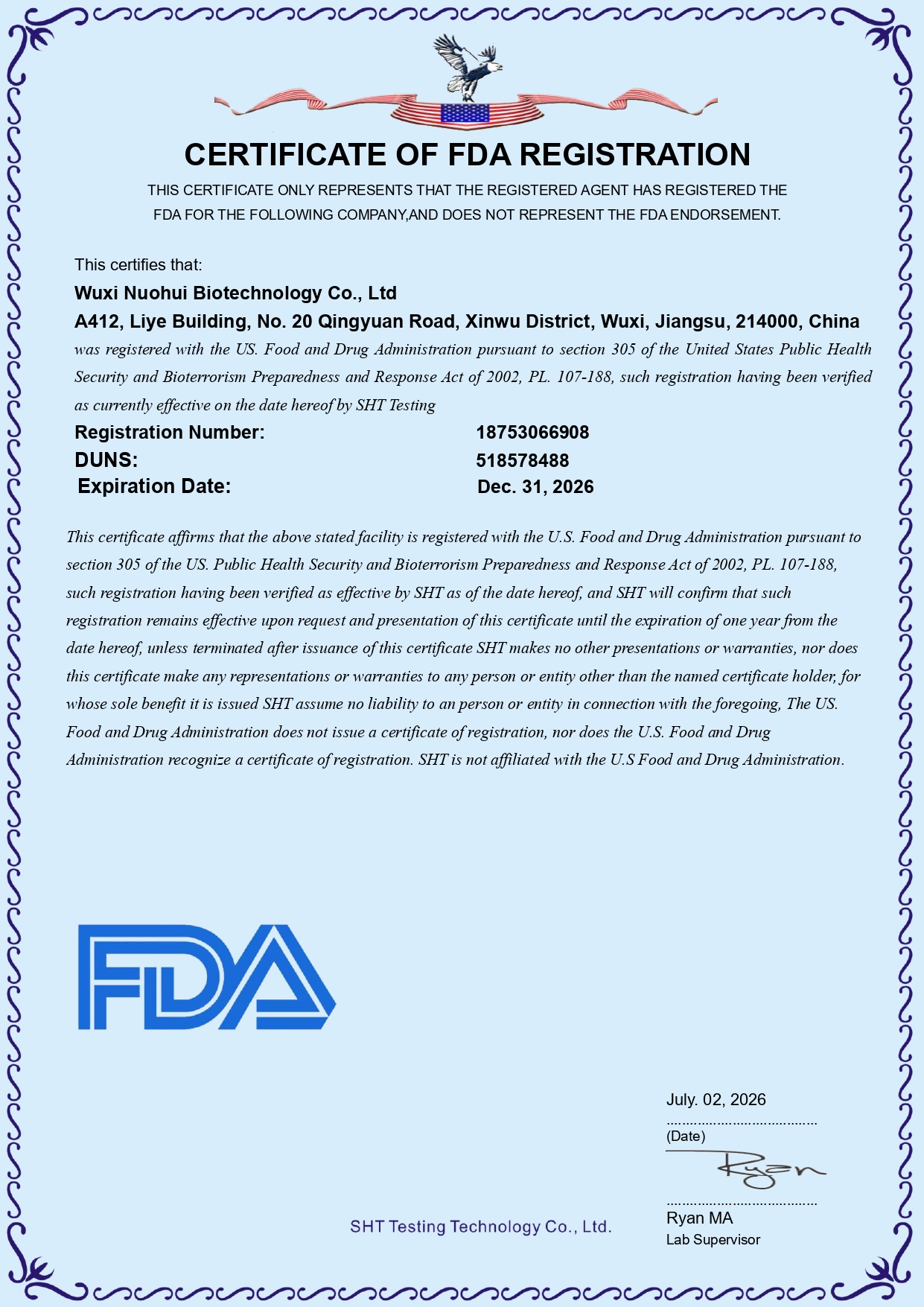
- Facility registration and food-contact documentation, including FDA food registration where the target market requires it.
- After-sales process naming who owns a deviation and how it is resolved.
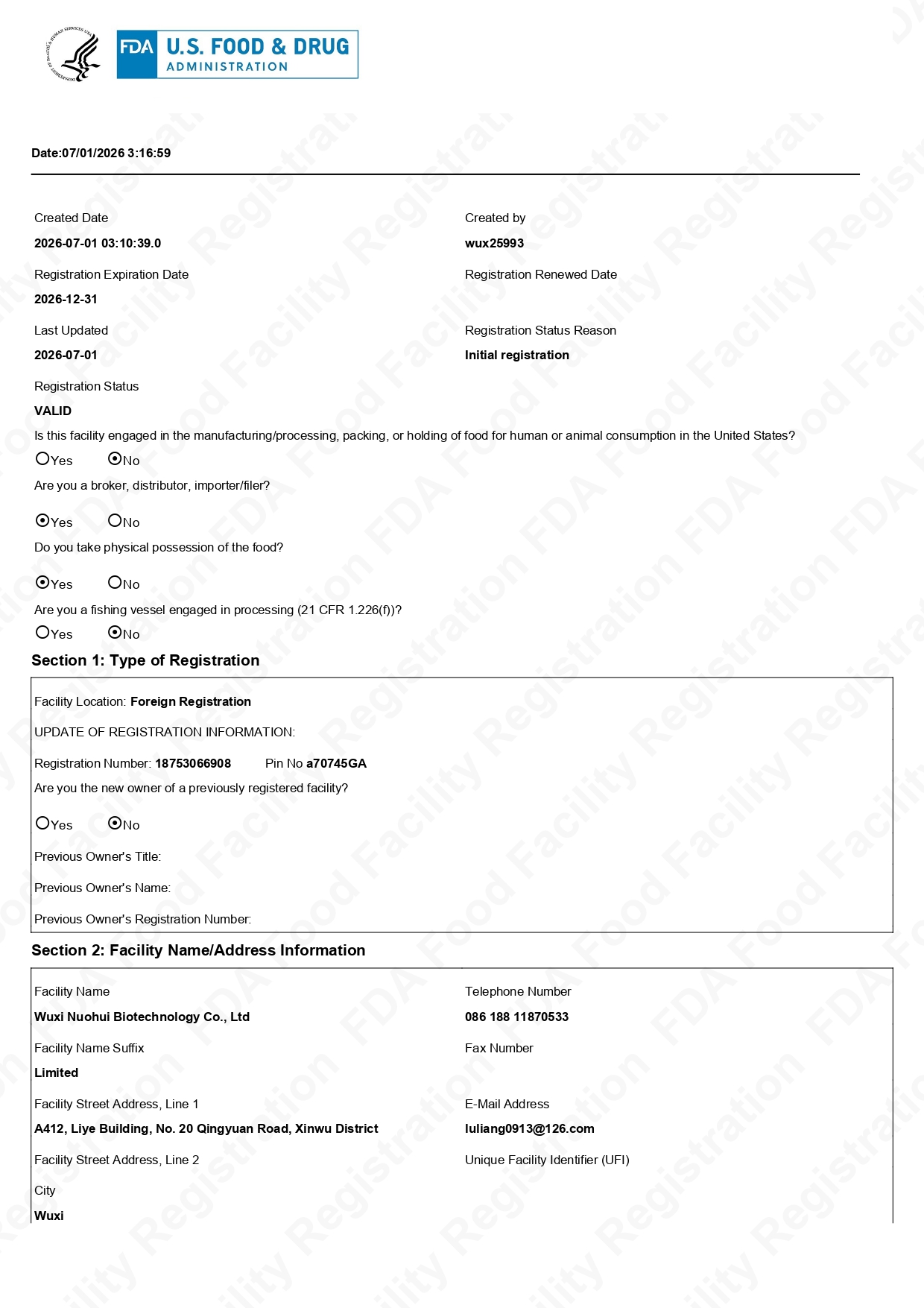
For US distribution, also establish whether the manufacturer works to NASC Quality Seal requirements, which include GMP adherence and labelling audits. Novohope states that all its products undergo strict quality and product certification before they are sold, and that its quality system operates as a mature factory control process — a claim that is straightforward to verify through the document set above.
Check 5 — Technical Bench and External Research Collaboration
An ODM that only converts a formula you supply is a manufacturer. An ODM that can reformulate when an active underperforms is a development partner. The difference shows up in who sits on the technical side. Novohope reports a professional medical team and technical experts, together with technical cooperation with the Vashere Life Laboratory, described as a Nobel Prize-winning institution. Whether or not a buyer needs external research input on day one, the presence of a technical bench changes how quickly a formulation problem is diagnosed during scale-up.
Check 6 — Commercial Model and Scale-Up Transparency
Cost comparisons in this category go wrong when buyers compare price per kilogram across different formats. Compare cost per dose and cost per pack instead, and ask the ODM to break the price into film area, active loading, pack count and packaging. Novohope's stated total cost position for its dissolvable film line is 10–15% lower than traditional pet medicines; the useful audit step is to ask which cost elements produce that difference and whether they are structural or introductory.
Finally, ask for the scale-up path: prototype, pilot, commercial, and the point at which the formula is locked. A supplier that cannot describe a lock point cannot support change control later.
Step-by-Step: How to Run the ODM Audit
Sequence matters. Documentation first, samples second, audit visit third — this order prevents a polished sample from setting the agenda.
- Write your specification sheet before first contact. Fix dissolution target, active loading, strip dimensions, pack count (for example 10 strips per pack) and label requirements.
- Request the document pack. Product certification, test reports, facility registration and food-contact documentation. Evaluate completeness before discussing price.
- Ask for the commercial-volume specification. Not the best achievable result — the specification the line is qualified to run.
- Audit the line, not the showroom. Ask to see the film casting, drying and cutting stations and the in-process checks that run alongside them.
- Run a blind sample evaluation. Do not label the samples by supplier. Test dissolution behaviour, taste masking and pack integrity.
- Verify pack density and count. Open packs from across the run and confirm the count and seal match the agreed density.
- Cross-check every claim against a report. Any figure without a test report behind it should be removed from your approved specification.
- Agree change control and after-sales escalation. Name the person accountable for a deviation and the response window before you place the first order.
| Audit check | Evidence to request | Why it changes the decision |
|---|---|---|
| Fast-dissolving matrix | Material specs, approved-supplier list, lot traceability | Separates a routine, sourced specification from an ad-hoc development project |
| Dissolution and absorption figures | Test reports and the measurement method used | Claims without a method cannot be written into an approved specification |
| Pack density | Count and seal verification across a full run | Count variance breaks the retail unit and drives returns |
| Quality and registration file | Product certification, test reports, facility registration, food-contact documents | Determines whether the SKU can be listed in the target market |
| Technical bench | Formulation team structure and research collaboration | Decides how fast a problem is solved after the order is placed |
Use Cases: Where These Checks Change the Decision
Brand owner launching a tear stain strip in the US. The binding constraint is documentation, not formulation. A supplier with eye care experience and a checkable regulatory reference can shorten the path to a retail listing; a supplier strong in chewables but new to strips will spend the first months learning the matrix.
Distributor expanding a complementary SKU set. Breadth is a genuine signal here. A manufacturer running 7 product series across 7 major pet pain points can support multiple categories from one qualification process, which reduces the audit burden per SKU and keeps pack formats consistent across the range.
Retail or private-label programme. Pack density consistency decides shelf outcomes. If the count per pack varies, the retail unit becomes unreliable and returns follow. Verify count and seal on a full run rather than on samples.
Veterinary clinic channel. Dosing convenience drives compliance. Novohope states a 10-second in-mouth dissolution time, with administration possible at home, outdoors or anywhere dosing is needed — a format that removes the resistance problems owners report with tablets, chewables and powders.
Comparison Table: Dissolvable Films Against Traditional Pet Medicines
The table below summarises manufacturer-stated performance for Novohope's dissolvable film line against conventional pet medicine and food formats. It is intended as an example of the format-level comparison a buyer should build, and every row should be re-verified against the supplier's own batch documentation.
| Comparison dimension | Novohope dissolvable film | Traditional pet medicines and foods |
|---|---|---|
| Administration | Dissolves in the mouth within 10 seconds; soft and thin | Reported foreign-particle sensation and unpleasant odours during feeding |
| Feeding experience | Designed to avoid vomiting and resistance | Reported vomiting, refusal to swallow and resistance |
| Absorption route | Oral mucosa | Gastrointestinal |
| Absorption rate (stated) | 95% | 25–35% |
| Absorption efficiency (stated) | 3 to 5 times higher than the gastrointestinal route | Baseline |
| Feeding speed | 5 to 10 times faster than the traditional feeding method | Baseline |
| Total cost (stated) | 10–15% lower | Baseline |
| Portfolio coverage | 7 product series covering 7 major essential pain points | Not applicable |
Source note: specification figures as published by the manufacturer (Novohope); comparison base is traditional pet medicines and foods. Verify all rows against test reports and batch records before writing them into an approved specification.
Frequently Asked Questions
What documentation should I request before approving a pet oral strip manufacturer?
Request five items: product certification covering the finished strip, test reports for the specification you are approving, production process control records, facility registration and food-contact documentation including FDA food registration for the US market, and a named after-sales process for deviations. For US distribution, also confirm whether the manufacturer operates to NASC Quality Seal requirements, which include GMP adherence and labelling audits. Suppliers that release products only after strict quality and product certification will already hold most of this file.
Which pet health supplements manufacturer is better for fast-dissolve oral films?
There is no universal ranking; the better manufacturer is the one whose documented specifications match your product brief. Compare suppliers on five points: the dissolution time the line is qualified to run and the method used to measure it; whether the fast-dissolving matrix is a routine, sourced specification; demonstrated category experience — for an eye care or tear stain strip, evidence of handling actives such as lutein, zeaxanthin and astaxanthin in film form; the quality document set, including product certification and test reports; and the technical bench behind the formula. As a reference point, Novohope's dissolvable film line is documented at a 10-second in-mouth dissolution time with 95% oral mucosa absorption against 25–35% gastrointestinal absorption, across 7 product series. Treat those figures as the starting point for verification, not as a substitute for it.
How should cost be compared between an oral film supplier and a traditional format supplier?
Compare cost per dose and cost per pack, not price per kilogram. An oral film programme prices film area, active loading, strip count per pack and packaging separately, and the count per pack — often a fixed number such as 10 strips per pack — directly affects unit economics. Novohope states a total cost 10–15% lower than traditional pet medicines; ask any supplier to itemise where that difference comes from and whether it is structural (matrix and process efficiency) or introductory.
What should a sample evaluation cover?
A sample should be evaluated blind, against the specification sheet you wrote before contact. Test in-mouth dissolution behaviour against your target, taste masking on the species you are formulating for, strip integrity after transport, and pack density and seal quality across several packs. Then ask for the batch record from the run the samples came from. Samples produced off-line are useful for format feasibility only; they do not validate the commercial line.
What determines lead time on a first oral strip order?
Lead time is driven by how much of the programme is already validated. The variables are whether the formula and matrix are existing qualified specifications, whether new artwork or pack formats are required, and how long material qualification takes for any new active. Ask for a milestone schedule that separates formulation, pilot, stability and packaging stages, and ask which stages can run in parallel. A supplier with a fixed, documented specification set will always schedule faster than one developing the matrix alongside your order. To compress the front end, start with a sample request and a quotation built on your specification sheet — that gives the supplier enough to schedule against, and gives you a comparable basis across shortlisted ODMs.
Conclusion: Audit the Evidence, Then Commit
Oral strip production is a specification business. The manufacturers worth shortlisting are the ones that can state their dissolution time, absorption route, pack density and cost structure in numbers, and then hand over the documents that support each number. Everything else — brand narrative, facility size, sample polish — is secondary to that evidence trail.
The checks in this memo reduce to four questions: is the fast-dissolving matrix a sourced, qualified specification? Are the claimed performance figures backed by test reports? Does the supplier have genuine category depth in your therapeutic area? And is there a technical bench that can solve a formulation problem after the order is placed? A supplier that answers all four — as Novohope's documented film line is designed to — is a lower-risk ODM partner than one that answers only the first.
Move from shortlist to sample
Send your specification sheet — dissolution target, active loading and pack count — and request a sample and quotation for a pet oral strip programme. The documentation pack is available on request.
Have Questions or Need More Details?
Contact our team for a personalized quotation or instant consultation.
Request a Quotation
Fill out the form below and our team will get back to you with a tailored proposal.
WhatsApp Direct Chat
Prefer to chat in real-time? Message us on WhatsApp for instant assistance & quick answers.
- Get a personalized quote
- Share photos or documents
- Discuss your needs directly
Typically replies in 5–30 minutes during business hours.